
Hard Hats
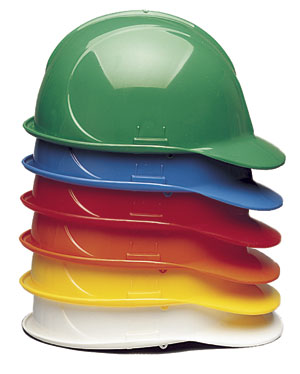
Description
Hard hats are required when working in areas where there is a potential for injury to the head from falling objects. In addition, hard hats designed to reduce electrical shock are required when working near exposed electrical conductors that may contact the head.
Specifications
Use of Hard Hats
Hard hats should be used when falling object hazards may result from activities with proximity to:
- persons or operations where accidental dropping or loss of material, tools, equipment or other articles could lead to a head injury;
- a barricaded or posted demolition or construction area where head hazards exist;
- objects stored on shelves, platforms, etc. that may fall and cause head injury; or
- overhead exposed energized conductors nearby.
Types and Classes
- Type 1 – Helmets intended to reduce the force of impact resulting in a blow only to the top of the head.
- Type 2 – Helmets intended to reduce the force of impact resulting in a blow to the top and the side of the head
- Class E (Formerly Class B): Helmets for sue where electrical hazards are present (in utility services) that are non-conducting and intended to protect against falling objects and reduce the danger of exposure to high voltage electrical shocks and burns. Offers the highest protection with high-voltage shock and burn protection up to 20,000 volts.
- Class G (Formerly Class A): General Use (limited voltage – non-conducting) intended to protect against falling objects and reduce the danger of exposure to low voltage electrical conductors. They provide impact and penetration resistance and protection from up to 2,200 volts.
- Class (Formerly Class C): Class C Hard Hats are not tested for electrical resistance. They are designed for lightweight comfort and impact protection and are not intended to provide protection from electrical conductors.